Sanctuary begins with a change of frame: from music as something to be consumed, to music as something we make, share and live inside together.
The frame we inherited
Music as content.
Value
The attention economy.
Principle
Competition and survival.
Method
The algorithm: streaming, feeds, the endless scroll.
Action
Post, promote, scroll, repeat.
→
The frame we're building
A sanctuary of reciprocity.
Value
Be real · be curious · be human · be together.
Principle
Collaboration and reciprocity.
Method
The anti-algorithm: slow time, human hands, and the rhythm of seasons and rituals instead of the feed.
Action
Gather, make, listen, rest, return.
How we build it
Slowly, and on bedrock: small, real, and proven at each step before the next. (Derek Lidow's four stages of a lasting enterprise.)
Stage 1 · Now
Gather before we build.
Ceremonies, song circles and Chamber Meditations; retreats in Oaxaca, Kerala and Rīga; a founding circle. Proving that people come, and come back.
Stage 2 · The land
Simple, reliable rhythms.
The land secured. The first artists in residence, open weekends and concerts, the kitchen and garden running. The daily and weekly routines that make it a place.
Stage 3 · Balance
An economy that holds.
Weekends, concerts and workshops sustaining the residencies. Work-to-stay seats always open. It runs on its practices, not on any one person.
Stage 4 · Renewal
Share the model.
Publishing what we learn, so others can build sanctuaries in their own places.
§03 · The SanctuarySix commitments, six rooms
The Sanctuary
Six commitments. Six rooms to hold them.
Not amenities: the design of the place itself. Sanctuary is a shared-work environment. Everyone who lives here keeps it alive through a work exchange, in the garden, the kitchen and the house, and the gates open often.
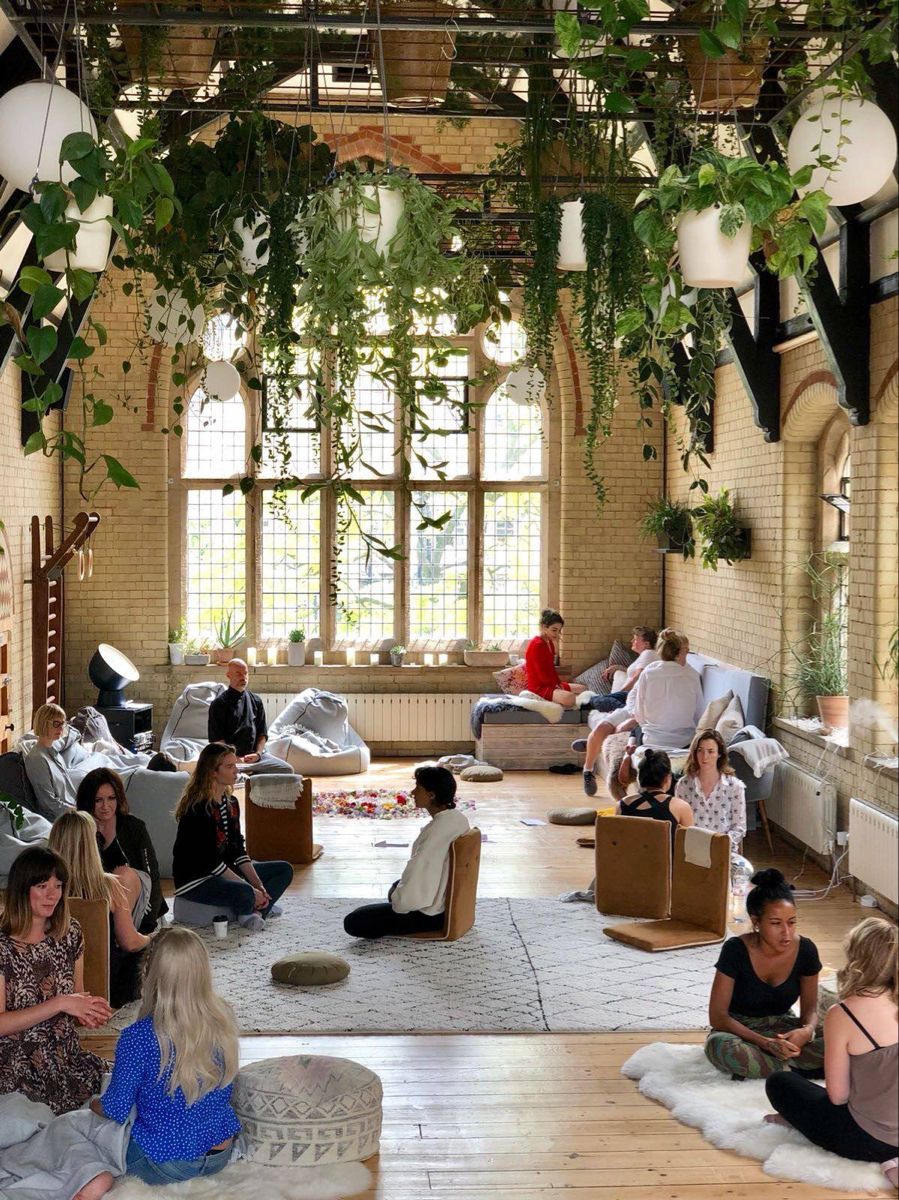
Architecture suggests the relationship. Rows of seats facing a stage make an audience; a circle makes a community. Every room here is shaped for the circle: the sanctuary hall, the amphitheater, the long table.
i.
Shared meals.
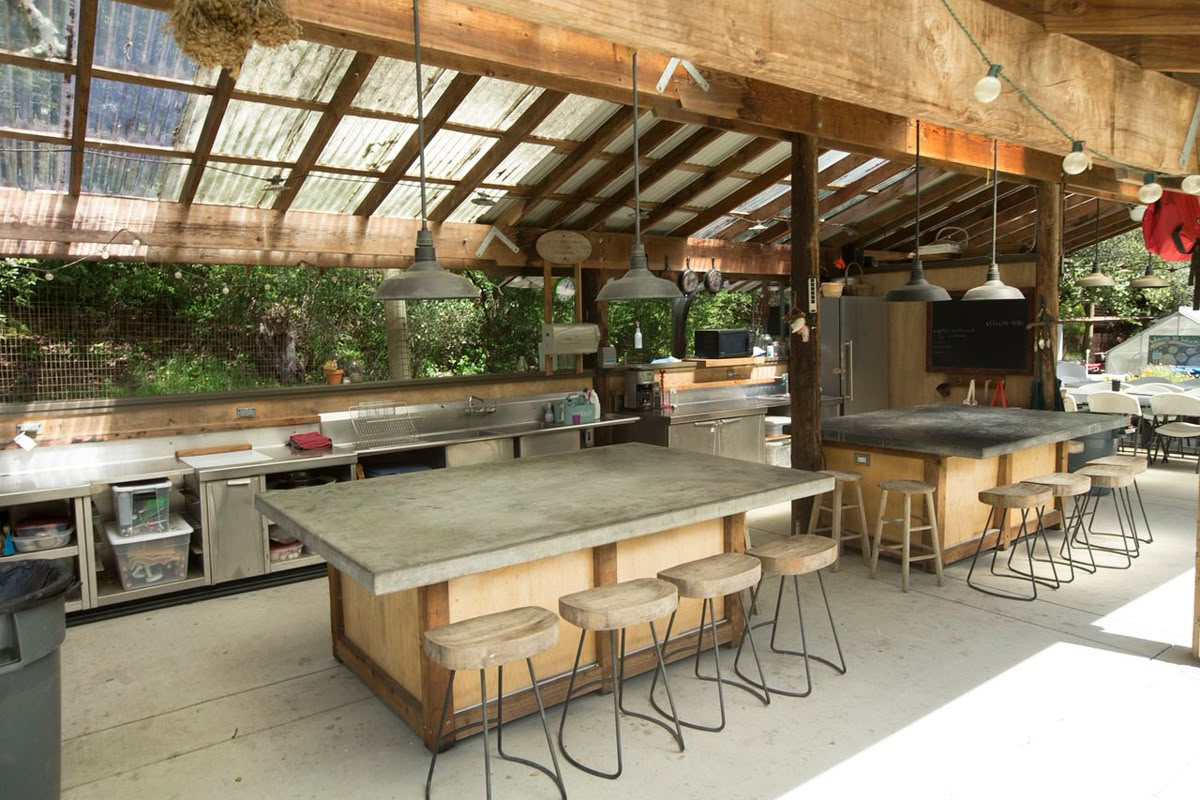
The oldest technology for making a community. Meals are cooked in the communal kitchen from what the garden gives, by all of us, residents and guests together. Every day begins and ends around one table: the time when everybody gathers and everyone takes part.
ii.
Shared knowledge.
Non-hierarchical, in the Black Mountain College lineage. Lectures and works-in-progress from the artists in residence, open workshops, and concerts open to the public. Teachers and students eat, work and learn in the same rooms.
iii.
The land as collaborator.
Not a backdrop, and not only a garden. An eco-village where artists and community practice stewardship together, and relearn kinship with the living ground: soil, water, seasons, and the Indigenous history of the specific place we settle. The land is part of the work, and part of the prayer.
iv.
An imagination incubator.
The future belongs to whoever can imagine the most beautiful one, clearly. Imagination takes safety, time, resources and support. Sanctuary exists to give it all four, and to ask out loud the questions traditional institutions can't, or won't.
v.
The baths.
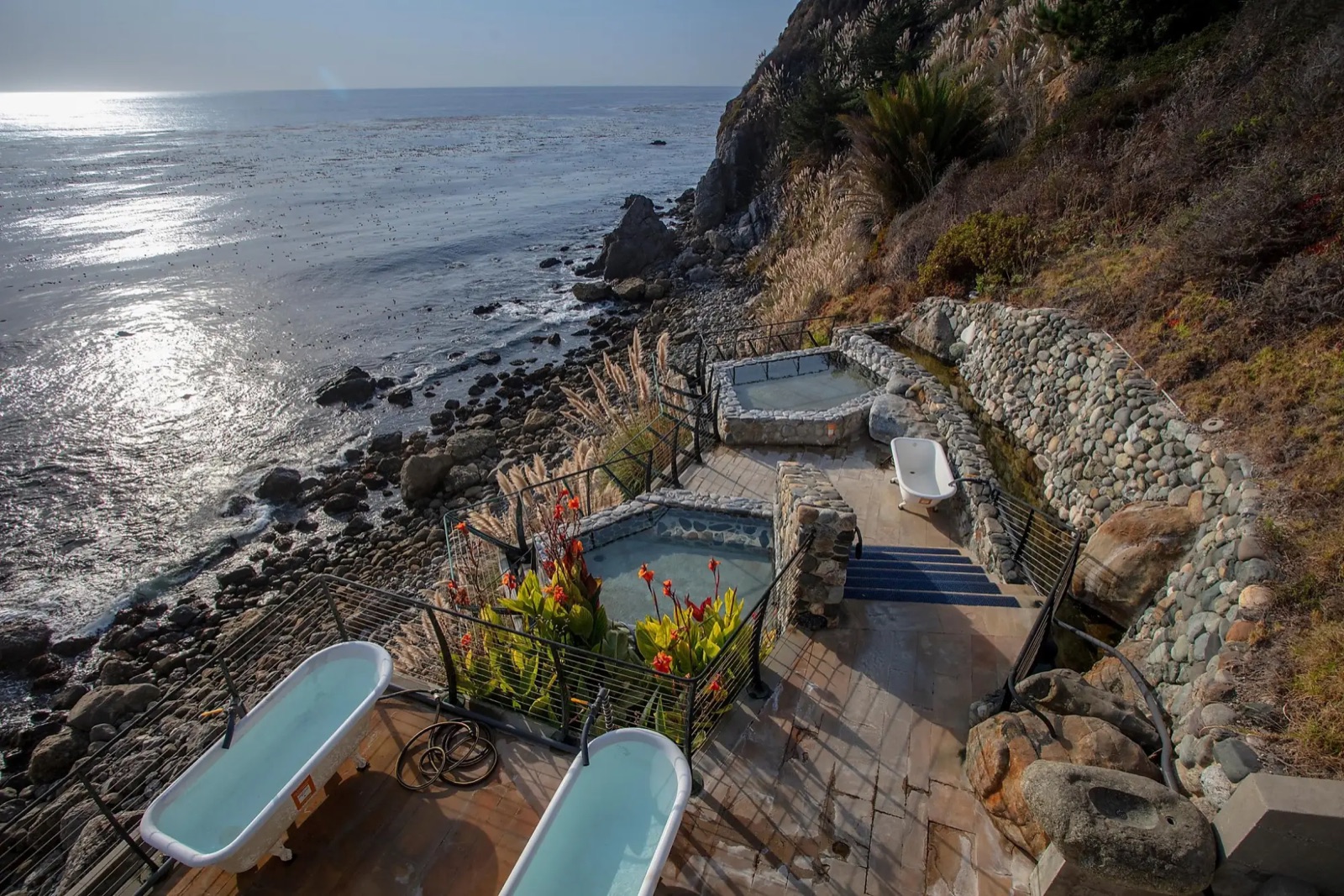
In the lineage of the Japanese onsen, the hammam and the banya: bathing as a daily, communal, restorative ritual. Heat, water and rest, shared simply among neighbors, the way Esalen's baths hold its community. A place where the body softens, time slows, and honest conversation comes easily.
vi.
A return to time.
Byung-Chul Han writes about the disappearance of ritual: rituals are to time what a home is to space. Online there is no time, only an endless present. Sanctuary is a place to come back into time: to mornings and evenings, seasons and moons, and rituals that mark them together.
Sanctuary Hall
Gathering room
For meditation, lectures, ceremony and song. Spiritual and secular at once, welcoming any tradition and demanding none.
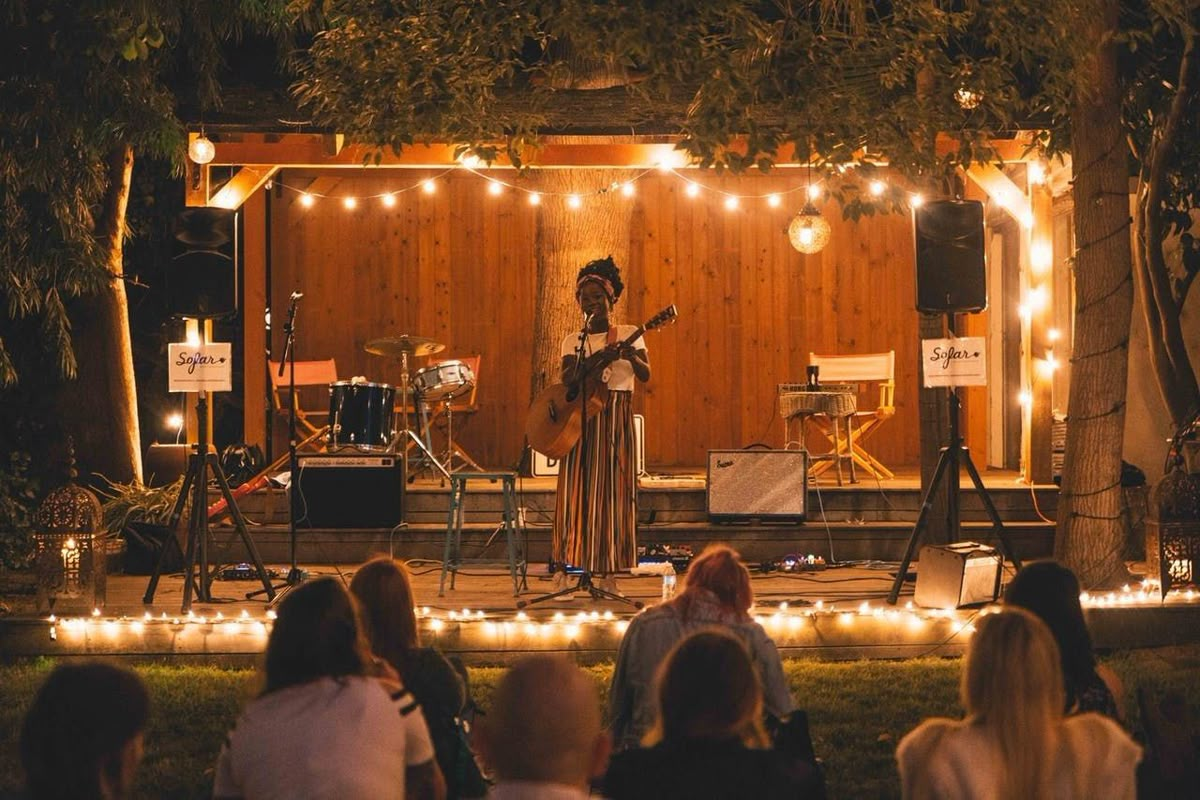
The Amphitheater
Concerts, open to the public
Outdoor tiered seating for up to a hundred, opening onto the land. Resident artists, visiting musicians, seasonal series.
Kitchen & Dining Hall
A gathering space
Where the day begins and ends. Everyone cooks, everyone eats, everyone washes up.
The Gardens
A gathering space
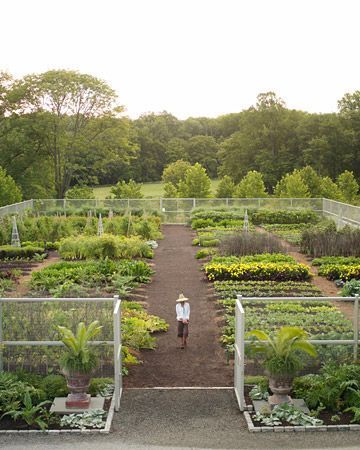
Tended together. Food for the table, and work that grounds the day.
The Recording Studio
Signal room
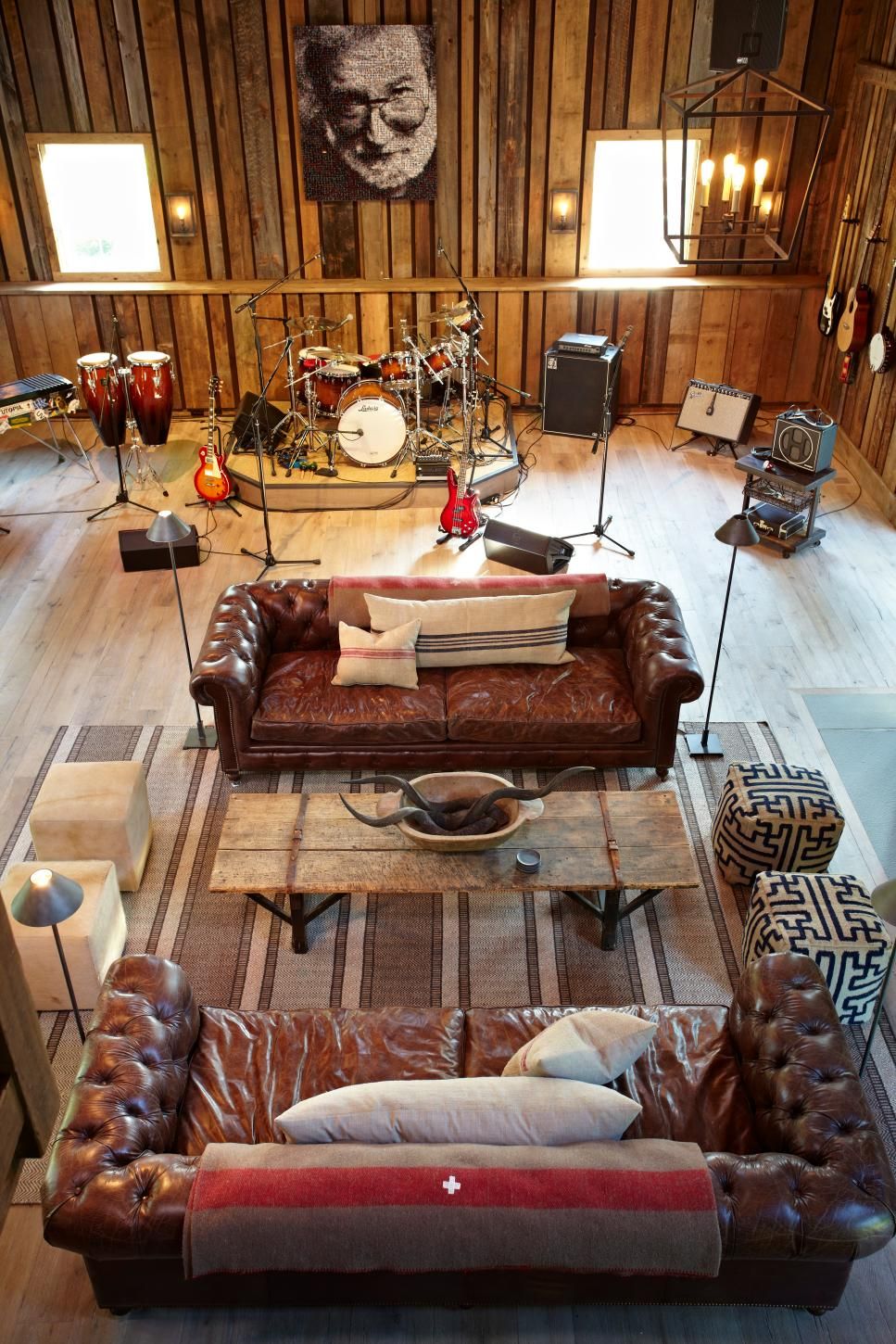
For songwriters and small ensembles. Records made the way they used to be: in a room, with the people who wrote them.
The Baths
Heat, water, rest
Onsen-inspired: hot pools, cold plunge, open air, a quiet resting room. Open daily to residents and guests. Vision reference: the baths at Esalen, Big Sur.
6artists in residence at a time, who also teach
25overnight guests for longer workshops
100guests for single-day workshops and concerts
An order of magnitude, not a ceiling: gatherings of about five to a hundred people.
§04 · ProgramsDaily practice · Community sing · Retreats · Residencies · Concerts
Programs
Four rhythms, one calendar, designed so life doesn't leak out.
At the core, a constant community lives on the land: six artists in residence at a time, who also serve as the teaching fellows, on a rotating basis. Everyone keeps the place alive together. Around them, the gates open: weekly for song, monthly for immersive weekends, and all season long for concerts. It's the Black Mountain College model at the center, and the Esalen model at the edges.
Daily
Practice, work, and the shared table.
Morning sitting and a shared breakfast. Then the work of the place, in the Black Mountain College tradition: the garden, the kitchen, the land, and the chores that keep a home alive, shared by everyone who lives here. That's how residents earn their keep. Afternoons belong to the making. Evenings bring a shared meal and an artist reading or talk. Spiritual and secular at once, open to any tradition, requiring none.
Weekly
The community sing.
Once a week, the doors open for shared singing: a community choir for residents, guests and neighbors, no audition and no experience needed. Followed by an open table. The simplest way into Sanctuary, and maybe the most important.
Monthly
Immersive weekend retreats.
One weekend a month, Sanctuary hosts a designed three-day immersion with live music at its center: songwriting, embodied singing, ceremony and ritual, composition and silence. Up to 25 overnight guests. Led by resident faculty and visiting practitioners. Tiered access; work-to-experience seats always held.
Seasonal
Artists in residence, who also teach.
Six artists live on the land at a time, on a rotating basis. Each is also a teaching fellow: writing, recording, teaching what they know, cooking for the house. Residents share works in progress, give public talks and concerts in the amphitheater, and teach at least one workshop for visitors. The heart of the model.
Already happening · from one evening to a whole season
Not a sketch. A record of what has already been done.
Every format Sanctuary will offer has already been held, in borrowed rooms, across Princeton, Chicago, Brooklyn, Hopewell, Mexico, the Baltics, India and Malaysia. Listed from the smallest step in to the largest.
One evening
A ceremony.
Chamber Meditations in Princeton University Chapel (2023–24); the Chicago summer ceremonies (2026); a sold-out sound journey at Gratitude Yoga.
Live music is the spine of every one: an ensemble built for the room, a script for the arc, breath and voice for everyone present.
An afternoon
A small circle.
The New Year's Day Salt Cave Ceremony: ten places, sold out.
Sound healing, readings and journaling in a candlelit salt cave.
A weekend
An immersion.
Creative Fire, Spring Equinox 2026.
Two days of salt cave meditation, sound healing, voice activation and a self-authoring ceremony around a bonfire.
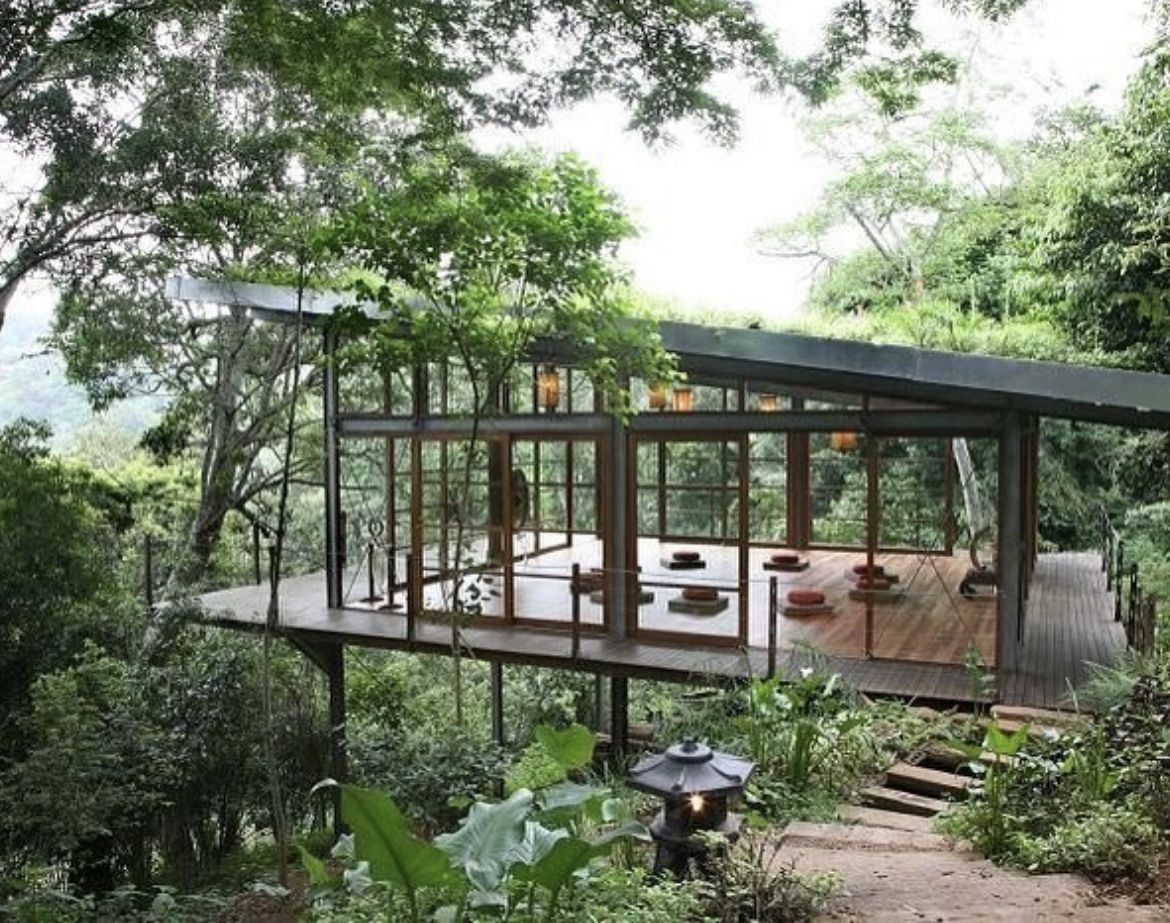
Photos of the space to come
A week
A retreat.
The Mazunte Songwriting Retreat, Mexico (June 2025).
Writing, shared meals and an evening song share by the sea.
A season
A series.
A summer of ceremony, ritual and music in Chicago: several ceremonies, each with a different musical collaborator (2026).
The seasonal model Sanctuary is built around, tested in borrowed rooms.
Months
A school and a residency.
The online school (2020–21): ten-week to five-month cohorts. And Hope's own residencies, including a month at Esalen.
The long form: people making work together over time.
Accommodations & tuition
How to be at Sanctuary, and what it costs.
Sanctuary's economics are structured so that anyone who fits the room can be in it. Tuition is published, tiered, and public. Work-to-experience is always available. Full published pricing goes live once the land is confirmed; the shape is as follows.
Concert visitors
A single night.
Sliding-scale tickets. Occasional free nights for the local community. No membership required. Overnight lodging by arrangement when the house has room.
Workshop participants
A weekend or a week.
Private or shared retreat lodging. Tuition covers all meals, sessions, land access, and the baths. Sliding scale on every offering. Work-to-experience seats reserved on every retreat.
Artists in residence
A season on the land.
A season on the land. A private cabin, all meals, studio access, the gardens and the baths, in exchange for sharing the daily work of the place. Modest stipend (aspirational). Applications open to founding-circle members first, then publicly. Selection by cohort fit, not portfolio ranking.
Podcast · listen
The Hope Littwin Podcast — evolving into the studio's voice.
Hosted by Hope Littwin. Conversations with musicians, composers, teachers, and deep thinkers on ceremony, ritual, sound, and the practice of making. The show that laid the intellectual and musical groundwork for Sanctuary itself, expanding into the studio's ongoing audio program.
Sanctuary is already happening, in borrowed rooms.
Ceremonies, immersions and workshops Hope has led, in Princeton, Chicago, Hopewell, Mexico, the Baltics and Malaysia. Every photo here is real. Watch more on YouTube, and listen to The Hope Littwin Podcast.
The Sacred Sound of Self-Embrace · ChicagoPauri of Infinity · ChicagoChamber Meditations One · PrincetonDay of the Dead ceremony · PrincetonChamber Meditations: Salt Cave · HopewellChamber Meditations: Group Sing · PrincetonChamber Meditations: Joy Flow · PrincetonNew Year's Day salt cave ceremony · HopewellMazunte Songwriting Retreat · MexicoWith Aliento y Latido · Mexico CityWith the NOJO Airlines Orchestra · VilniusKanklės in the park · LithuaniaSongwriting session · RigaChoral collaborations · Kerala, IndiaAncient Codes in Our Musical Roots · Universiti Malaysia Sabah
2017 Leading a church choir in Chicago2020 Sanctuary Studios opens online2023 Chamber Meditations begins2025 Sanctuary goes international2026 Immersions and ceremonies
Composer, singer-songwriter, and music producer for stage, screen, and the inside of your headphones. PhD candidate in music composition at Princeton, where her dissertation examines ceremony, ritual, and music in contemporary artistic practice. Co-instructor of EGR 312: Transformative Design with Kees Dorst. Three decades as a working musician. Her music has been commissioned by the Attacca Quartet, Alarm Will Sound, Ekmeles, ModernMedieval, Yarn Wire and Pro Coro Canada, with residencies at the Esalen Institute, the Banff Centre and Avaloch Farm Music Institute.
Sanctuary Music Studios is the built form of the thesis: the sanctuary the research kept describing, made real.
Professor of Design Innovation, co-instructor of EGR 312: Transformative Design at Princeton, and author of Frame Innovation: Create New Thinking by Design. Advisor on the case-study reframing that turned Sanctuary Studios from a building question into an economy question.
§08 · PrecedentThe lineage Sanctuary stands in
The precedent
Five places that have already proven this shape of place works.
The Esalen Institute
EST. 1962
Big Sur, California. A creative laboratory and incubator of human potential. Sixty-plus years of continuous operation, seeded on a piece of land above the Pacific. Structured around what Aldous Huxley called the nonverbal humanities. Proved sanctuary can be economically self-sustaining without becoming a resort.
The Findhorn Foundation
EST. 1962
Moray, Scotland. An intentional community and ecovillage of about 350 people, structured around three principles: inner listening, co-creation with nature, work as love in action. UN-Habitat Best Practice, 1998. Proved sanctuary can be a working landscape, a school, and a residential community at once.
The Garrison Institute
EST. 2003
Garrison, New York. A "monastery for the 21st century" housed in a former Capuchin monastery on 95 acres overlooking the Hudson. 165 guests at capacity. Proved contemplative practice can hold ecological, artistic, and civic gatherings under one roof, secular and sacred at once.
Black Mountain College
1933–1957
Black Mountain, North Carolina. Twenty-four years, fewer than 1,200 students, one of the great generators of American art of the twentieth century. Faculty and students on the same land, on the same work programme, at the same tables. The template Sanctuary quietly follows.
Chautauqua Institution
EST. 1874
Chautauqua Lake, New York, far from any big city. A summer season of music, lectures, arts and worship, with its own lodging, where people come for days or weeks at a time. Proved that a seasonal model can carry a whole place, and that people will travel to somewhere remote for the right gathering.
Sanctuary Music Studios draws its shape from all five. We add one thing they don't have: a serious recording studio and a public concert life. Music is the medium through which our particular sanctuary teaches, gathers, and reaches an audience larger than the number of people who can live on the land.
Adjacent lineages: The Sri Kali ashram (Kerala), L'Abri (Switzerland), the hammam and banya traditions of the Silk Road, the Chicago theater-ensemble tradition, the ecovillage movement, adaptive-reuse architecture.
§09 · EconomyWhy this is different from a rich person's retreat
The economy underneath
The site is the container. The economy is what makes the container matter.
Sanctuary runs on cross-subsidy, the oldest institutional design in the book — the model universities, monasteries, and Esalen itself all use. Paid programs on one side (workshops, retreats, concerts, recording sessions, patron memberships) fund the unpaid work of art on the other (residencies, closed-reciprocity time for working artists, sliding-scale concert nights, work-to-experience seats).
We are committed to tiered access, published publicly and enforced structurally, so Sanctuary does not become an exclusive lodge:
A ceiling on the percentage of participants at the highest paid tier (proposed cap: 20%)
A permanent work-to-experience option for people who bring labor instead of money
Public concerts as the most accessible entry point — sliding scale, occasional free nights for the local community
Would anyone notice if it stopped? Do people return without being marketed to? Do they bring someone?
Our test for whether Sanctuary is working
§10 · Ways InBuild with us · a working wishlist
Ways in
Build with us.
Sanctuary is a place-in-formation. There are six ways to help make it real — land is the primary one, but not the only one. If any of these are yours to give, or yours to send along, we'd like to know.
i · Land
The primary ask
A donation of 15+ acres in the United States, tax-deductible via Sanctuary Music Studios' 501(c)(3) status (in formation). Ideally 20–40 acres. Existing structures welcomed — a decommissioned camp, retreat center, farm, or institutional site would compress the build timeline. Water rights, road access, and buildable zoning for residential + assembly use. A landscape a musician would want to write in.
Reference: White Oak Savanna, Dodgeville, Wisconsin — a 66-acre organic-certified oak savanna prairie with a restored 1920s barn (built by Frank Lloyd Wright's cousin, Charles Lloyd Jones). Not the land we're asking for, but the shape of the land we're asking for.
ii · Buildings
Adaptive reuse
Existing buildings — deconsecrated churches, emptied camps, monasteries, small institutional properties, warehouses with high ceilings, decommissioned schools — that want life in them. Sanctuary is designed to be at home in inherited architecture. If you own a building looking for its next purpose, or know one that is, we want to hear about it.
iii · Capital
Founding donations · angel investment
Founding-circle donations, angel investment, and program-restricted gifts (build the baths, seed the recording studio, sponsor a residency cohort). All giving is transparent, published, and cross-subsidized so donor money keeps a work-to-experience seat open for someone who can't pay.
iv · In-kind
Materials · labor · expertise
Builders, timber-frame carpenters, chefs, gardeners, permaculture practitioners, sauna and bath-house designers, sound engineers, recording gear, kitchen equipment, land-management consultants, lawyers who know nonprofit and land-trust law. If your craft is one Sanctuary needs to become real, there's a place for it in the build.
v · Introductions
Connections · counsel · advice
Introductions to landowners considering donations, to foundations that fund arts infrastructure, to founders of adjacent institutions who can advise on the first years. Counsel from anyone who has built something like this before. The relationship is the resource we most need alongside the land.
vi · Founding Circle
Sustained membership
An ongoing circle of people who commit to Sanctuary over years — modest recurring gifts, teaching a workshop, hosting a fundraising dinner, coming to the land quarterly, spreading the word. Founding-circle members receive first access to residencies, concerts, and every future gathering, and their names are held in the sanctuary of the sanctuary.
Each tab has its own link to send ahead of a conversation, for example sanctuarymusicstudios.com/#ask-land.
One thing to do
Write to us with the subject line matching what you have to give — "Land," "Buildings," "Capital," "In-kind," "Introductions," or "Founding Circle" — and tell us the shape of it.
If any of this is yours to give, or yours to send along.
One thing to do: write to us with the subject line "Land."
Tell us where the parcel is, how many acres, what's on it, and how you'd like to be in relationship with the sanctuary it becomes. We write back within a week. If the parcel is a fit, we fly out to walk it with you. If it isn't, we tell you honestly and, when we can, refer you to another project that might be right.
First access to Sanctuary's opening season, writing on ceremony and creative practice, and the story of the sanctuary as it becomes real. No funnels, no urgency, no noise.